
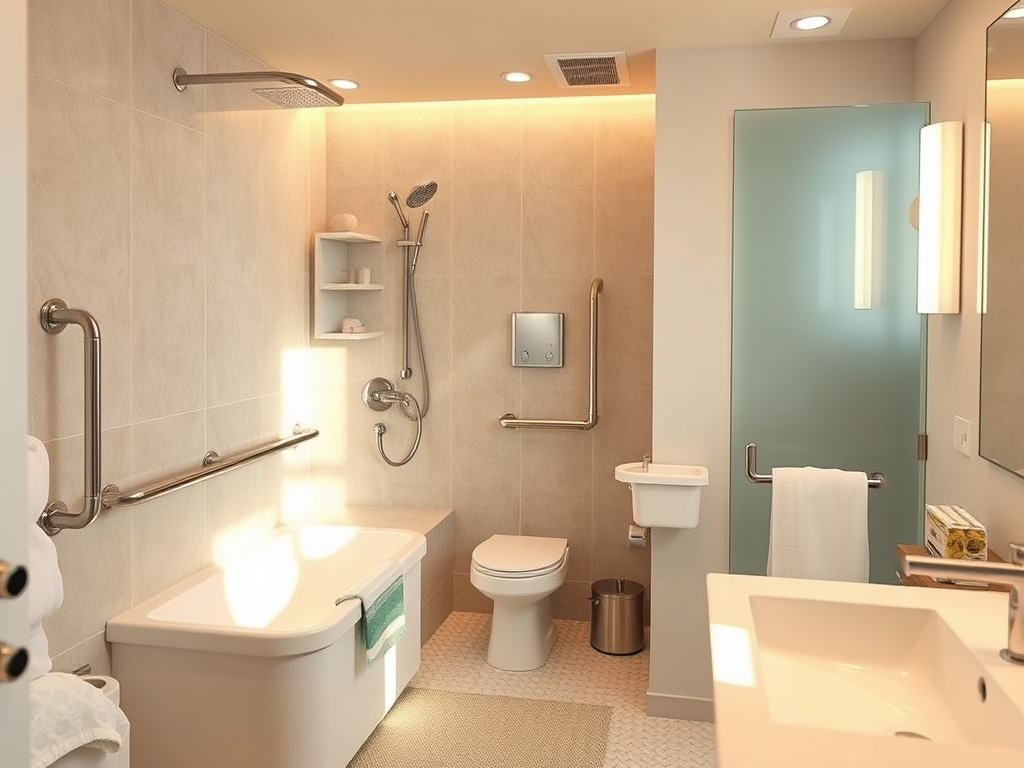
As we age, a safe and accessible bathroom becomes increasingly crucial. Transforming your bathroom to accommodate aging in place can enhance your comfort and independence and contribute to your overall well-being. This comprehensive guide will explore essential strategies for creating a senior-friendly bathroom that caters to your evolving needs, ensuring a seamless and secure living experience in the comfort of your own home.

Key Takeaways
- Understand the importance of bathroom safety for seniors to prevent accidents and maintain independence.
- Discover common bathroom hazards and how to address them through targeted modifications.
- Explore the benefits of early bathroom renovations and their impact on quality of life.
- Learn about essential features for an age-friendly bathroom design, including grab bars, walk-in showers, and accessible fixtures.
- Discover modern solutions and smart technology that can enhance bathroom safety and convenience.
Understanding the Importance of Bathroom Safety for Seniors
As we age, maintaining independence and safety in our homes becomes increasingly crucial. The bathroom, in particular, poses a significant risk for seniors, with common hazards that can lead to serious accidents and compromise their overall well-being. Understanding these challenges is the first step in creating a safer, more accessible environment for older adults.
Common Bathroom Hazards for Older Adults
Slippery floors, poorly-placed grab bars, and inadequate lighting are just a few of the common bathroom hazards that can threaten the safety of seniors. Bathroom accidents are a leading cause of injury among the elderly, with falls resulting in broken bones, head trauma, and loss of mobility.
Benefits of Early Bathroom Modifications
Proactive senior fall prevention measures can make a significant difference in the lives of older adults. By implementing aging-in-place benefits such as non-slip surfaces, accessible showers, and strategically placed safety features, seniors can maintain their elderly independence and reduce the risk of life-altering accidents.
Impact on Independence and Quality of Life
When bathrooms are designed with the needs of seniors in mind, the positive impact on their daily lives cannot be overstated. Increased mobility, reduced fear of falls, and a greater sense of security can all contribute to improved quality of life and the ability to age in place comfortably and with dignity.
| Bathroom Hazard | Potential Consequence | Recommended Solution |
|---|---|---|
| Slippery Floors | Slip and fall accidents | Non-slip flooring, bath mats, and grab bars |
| Poor Lighting | Decreased visibility, increased fall risk | Adequate lighting, motion-activated sensors |
| Inaccessible Fixtures | Difficulty using the toilet, sink, or shower | Adjustable-height features, grab bars, walk-in showers |
“Proactive bathroom modifications can significantly improve the quality of life for older adults, allowing them to maintain their independence and age in place with confidence.”
Essential Features for an Age-Friendly Bathroom Design
Creating an accessible and safe bathroom for seniors and individuals with disabilities requires thoughtful consideration of essential features. By incorporating universal design principles, you can transform your bathroom into a space that caters to the needs of senior-friendly fixtures and promotes ADA compliance.
One of the critical aspects of an age-friendly bathroom is slip-resistant flooring. Choosing a textured or non-slip surface can significantly reduce the risk of falls, a common concern for older adults. Adequate lighting is another essential element, ensuring the bathroom is well-illuminated to improve visibility and prevent accidents.
Proper ventilation is also crucial in an age-friendly bathroom design. Adequate airflow can help maintain a comfortable temperature and prevent excess moisture buildup, which can lead to mold and mildew growth.
By prioritizing these accessible bathroom features, you can create a space that is safe, comfortable, and promotes independent living for seniors and individuals with disabilities.
| Essential Feature | Benefit |
|---|---|
| Slip-resistant Flooring | Reduces the risk of falls and improves overall safety |
| Adequate Lighting | Enhances visibility and prevents accidents |
| Proper Ventilation | Maintains a comfortable temperature and prevents moisture buildup |

“Designing an age-friendly bathroom is not just about functionality, but also about creating a space that empowers seniors and individuals with disabilities to live independently with dignity.”
Transform Your Bathroom for Aging in Place: Key Modifications and Updates
As we grow older, maintaining independence and safety in our homes becomes a top priority. When it comes to aging in place, the bathroom often presents the most significant challenges. Fortunately, there are several key modifications and updates that can transform your bathroom into a haven of accessibility and comfort.
Installing Grab Bars and Safety Rails
One of the most essential steps in creating an age-friendly bathroom is the installation of grab bars and safety rails. These sturdy fixtures provide crucial support for seniors, reducing the risk of falls and accidents. Strategically placed grab bars near the toilet, shower, and vanity can make a significant difference in promoting independence and mobility.
Walk-in Shower Conversions
Traditional bathtubs can be notoriously difficult and dangerous for older adults to navigate. By converting to a walk-in shower, you can eliminate this hazard and create a more accessible, user-friendly bathing experience. Walk-in showers with low or no thresholds, built-in seating, and adjustable showerheads cater to the unique needs of seniors, promoting safer and more comfortable bathing.
Toilet and Sink Accessibility Solutions
Accessibility in the bathroom extends beyond the shower or tub. Incorporating features like raised toilet seats and accessible vanities can make a significant difference in the day-to-day lives of seniors. Raised toilet seats reduce the effort required to sit and stand, while adjustable-height vanities and sinks allow for easy reach and use.
By incorporating these key modifications and updates, you can transform your bathroom into a space that truly supports aging in place. From enhanced safety to improved mobility and independence, these changes can have a profound impact on the quality of life for older adults.

Smart Technology and Modern Solutions for Bathroom Safety
As we strive to create age-friendly bathrooms, the integration of smart technology and innovative products has become a game-changer. These cutting-edge solutions are designed to enhance safety, independence, and the overall aging-in-place experience for seniors.
One of the standout features is the advent of voice-activated fixtures. These intuitive systems allow users to control various bathroom functions, such as turning on the faucet or adjusting the water temperature, with simple voice commands. This not only promotes accessibility but also reduces the risk of slips and falls associated with reaching and bending.
Another transformative technology is motion sensor lighting. These smart lighting systems automatically illuminate the bathroom when they detect movement, ensuring a well-lit environment and preventing potential hazards in low-light conditions. This innovation is particularly beneficial for seniors who may experience reduced mobility or visual impairments.
Alongside these digital advancements, the use of non-slip innovations has become increasingly prevalent in modern bathroom design. From textured tiles and mats to specialized coatings for tubs and showers, these safety-focused solutions provide a secure and stable footing, reducing the risk of falls and enhancing overall bathroom safety.
By embracing these smart bathroom technologies and modern safety features, we can create environments that empower seniors to maintain their independence and enjoy a higher quality of life as they age in place.

“The integration of smart technology and innovative products has become a game-changer in creating age-friendly bathrooms.”
Conclusion
In conclusion, transforming your bathroom to support aging in place is a crucial step in ensuring the safety, independence, and well-being of seniors. By addressing common bathroom hazards and incorporating essential features for an age-friendly design, you can create a space that meets the evolving needs of older adults.
To assess your bathroom’s suitability for aging in place, consider conducting a senior home safety assessment and creating an aging-in-place bathroom checklist. This will help you identify areas that require modification, such as the installation of grab bars, walk-in shower conversions, and accessibility solutions for the toilet and sink.
When planning your bathroom renovation, be sure to consult with professionals who have expertise in age-friendly design. They can provide valuable guidance on the latest smart technology and modern solutions that can enhance bathroom safety and make your space more comfortable and accessible for seniors. By taking a proactive approach and investing in these essential updates, you can create a bathroom that supports your loved one’s ability to age in place with dignity and independence.

FAQ
What are the common bathroom hazards for older adults?
Some common bathroom hazards for seniors include slippery floors, lack of grab bars, poorly placed towel racks, high thresholds, and inadequate lighting. These can increase the risk of falls and injuries, which is a major concern for aging in place.
How do bathroom modifications benefit seniors?
Early bathroom modifications can significantly improve independence and quality of life for older adults. By addressing safety concerns, seniors can maintain their mobility, reduce the risk of accidents, and continue carrying out daily routines with greater ease and confidence.
What are the essential features of an age-friendly bathroom design?
Key features of an age-friendly bathroom include slip-resistant flooring, ample lighting, proper ventilation, adjustable-height fixtures, and the incorporation of universal design principles. These elements create a safer, more accessible, and comfortable environment for seniors.
What are some common bathroom modifications for aging in place?
Essential bathroom modifications for aging in place include the installation of grab bars and safety rails, walk-in shower conversions, and the use of accessibility solutions for toilets and sinks, such as raised seats and adjustable vanities.
How can smart technology enhance bathroom safety for seniors?
Smart bathroom technologies, such as voice-activated fixtures, motion-sensor lighting, and advanced non-slip materials, can significantly improve the aging-in-place experience. These modern solutions offer convenience, safety, and independence for older adults in their homes.
Leave a Reply