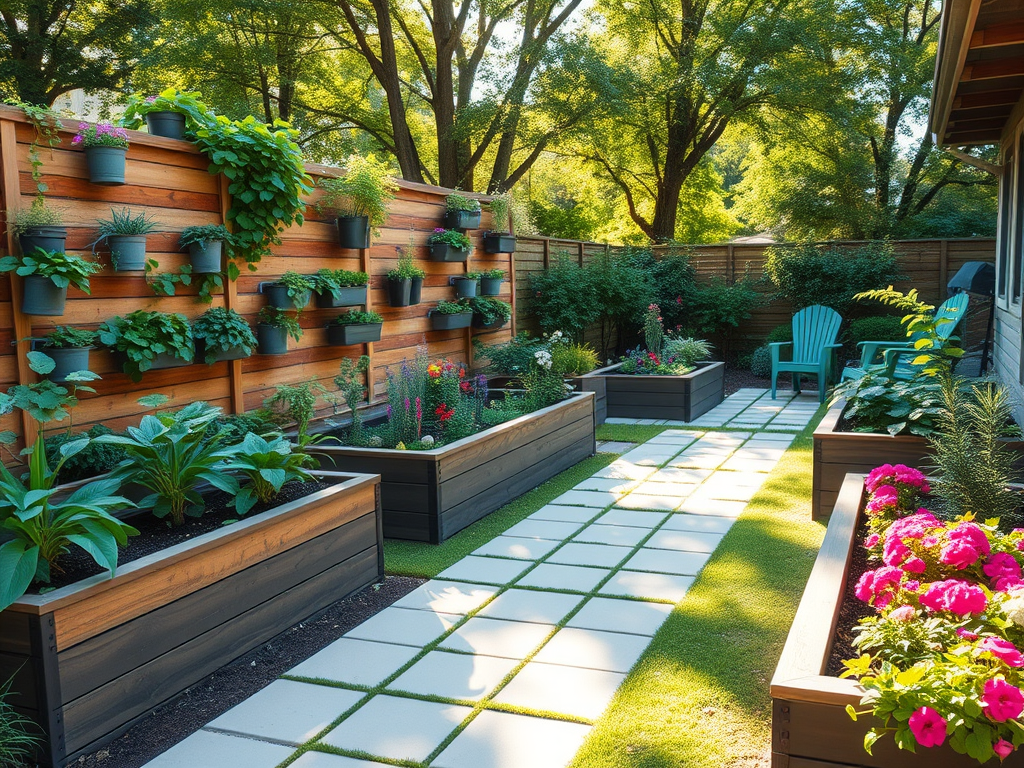
Before setting up your raised garden beds, consider these key factors:
✅ Sunlight Exposure – Most vegetables and flowers need at least 6 hours of direct sunlight per day. Observe where the sun hits your yard at different times to find the best placement. ✅ Easy Access – Place beds within arm’s reach of pathways or patios so you can tend to plants without stretching or straining. ✅ Water Source – Position your beds near a hose or rain barrel to make watering easy. ✅ Smooth, Stable Pathways – Ensure your garden is walker- or wheelchair-friendly with wide, non-slip paths made from gravel, pavers, or decking. ✅ Wind Protection – Use fences, trellises, or shrubs to block strong winds that can damage plants.
Best Places to Set Up Raised Garden Beds in Small Spaces
Even if you have a tiny backyard or a small patio, you can still enjoy gardening! Here are some creative placement ideas:
1. Against a Wall or Fence
🌿 Great for: Vertical gardens and maximizing space. 🏡 Why it works: Raised beds placed against a sunny wall use vertical support for climbing plants like tomatoes, beans, and cucumbers. 💡 Pro Tip: Add hanging planters or trellises above the beds for even more growing space.

2. On a Deck or Patio
🌿 Great for: People with limited mobility who need an easy-to-reach setup. 🏡 Why it works: Elevated planters allow standing or seated gardening, perfect for a deck or balcony. 💡 Pro Tip: Use rolling raised planters to move your garden with the sun!

3. In a Corner Garden Layout
🌿 Great for: Making use of underutilized corners. 🏡 Why it works: A corner L-shaped garden bed saves space and creates an attractive focal point. 💡 Pro Tip: Combine different bed heights to accommodate both standing and seated gardeners.

4. Along Walkways
🌿 Great for: Creating a border garden with easy access. 🏡 Why it works: Walkway garden beds make it easy to tend to plants without stepping into the soil. 💡 Pro Tip: Use waist-height raised beds so you can garden while standing.

5. In a Dedicated Small Garden Zone
🌿 Great for: Organizing a small backyard into a functional garden space. 🏡 Why it works: Designate a section with two to three raised beds arranged for easy access. 💡 Pro Tip: two to three raised beds arranged for easy access.

Making Gardening Easy with Mobility-Friendly Features
If you have mobility challenges, a few simple adjustments can make gardening much more comfortable:
✅ Raised Beds at the Right Height – Choose beds 24-36 inches tall to prevent excessive bending. ✅ Seating Options – Place a sturdy bench or garden chair nearby for resting. ✅ Drip Irrigation – Install an automatic watering system to reduce the need for carrying watering cans. ✅ Lightweight Tools – Use long-handled, ergonomic gardening tools for easier reach. ✅ Mulching & Weed Prevention – Apply mulch to minimize weeding and keep moisture in the soil.
Final Thoughts: Create a Garden That Works for You
Even in a small space, you can design a backyard garden that fits your lifestyle and mobility needs. With raised beds, smart placement, and accessible pathways, gardening becomes enjoyable, stress-free, and rewarding. Whether you’re growing herbs, flowers, or veggies, a well-planned space makes all the difference!
📌 Ready to set up your garden? Check out these recommended raised garden beds and tools to get started!


Leave a Reply