I’ll be honest with you. For a long time, I thought people who struggled with their household budget just needed a better spreadsheet or more discipline. Then I started paying attention to where people were doing it.
The Medicare statements are stacked on the kitchen counter. The checkbook lives in a drawer in the bedroom. The pension letter is somewhere on the dining table under the mail. Paying bills means walking room to room, squinting under dim light, and sitting in a chair that isn’t comfortable for more than ten minutes. No wonder it gets put off.
Here’s what I’ve learned: your budget may not be the problem at all. The space you’re managing it in might be.
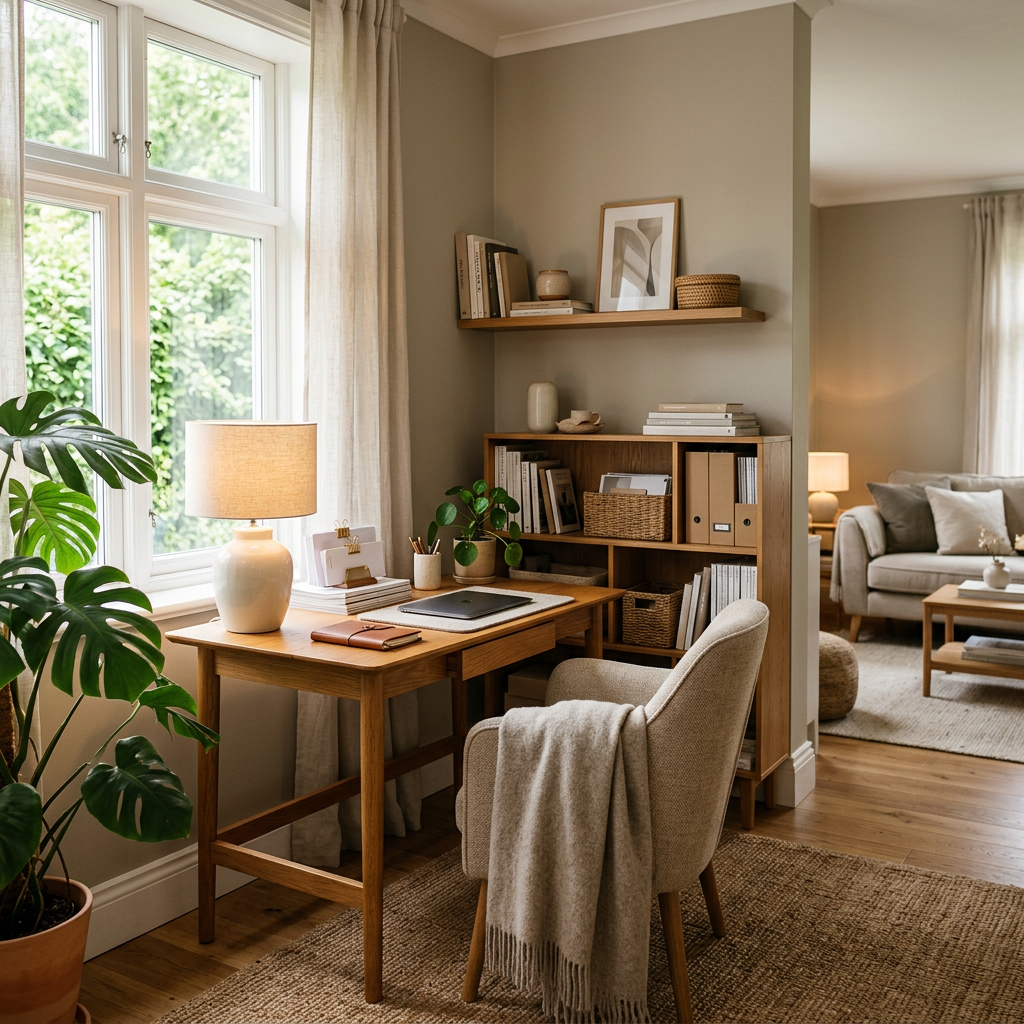
Whether you’re handling your own finances in retirement or helping a parent stay on top of theirs, a dedicated money corner can make all the difference. You don’t need a spare room. You can add a small office right in your living room, and it can be safe, comfortable, and beautiful.
Why Your Space Matters More as You Age
When paperwork is scattered, things get missed. A late payment, a forgotten renewal, a statement that never gets reviewed. One organized spot helps in three important ways:
- Everything is in one place. Bills, statements, your calendar, and your reading glasses are all within reach, so you’re not walking the house looking for them.
- It’s easier to spot problems. When you review your accounts in the same place every week, unusual charges and scam letters stand out faster.
- It makes it easier for family to help. If an adult child or trusted helper steps in, they know exactly where everything is.
7 Ways to Add a Beautiful Mini Office to Your Living Room
1. The Console Table Behind the Sofa

If your sofa sits in the middle of the room, a sturdy console table behind it makes a lovely writing surface. Choose one about 29 to 30 inches tall and pair it with a chair that has arms and a firm seat, which makes sitting down and standing up much easier than a backless stool. A lamp on one end and a small plant on the other keep it looking like part of the room.
2. The Secretary Desk That Closes

This is one of my favorites. A secretary desk opens for bill-paying and closes to keep everything tucked away and private, which is especially nice when visitors or caregivers come through. Look for one with easy-grip hardware, since tiny knobs can be hard on arthritic hands.
3. The Wall-Mounted Desk

If floor space is tight or you use a walker, a wall-mounted desk keeps the floor completely clear. Mount it at a comfortable height and add a shelf above for your budget binder, placing it between waist and shoulder height so there’s no reaching or stretching. Have it anchored securely into studs, since it will be leaned on.
4. The Corner Nook

That empty corner can become the coziest spot in the house. Add a small desk, a supportive chair, and a good floor lamp. Skip the loose area rug here, since rugs are one of the most common trip hazards at home. If you want to define the space, use a low-profile rug secured with non-slip backing.
5. The Bookcase Workstation

A bookcase with a desk-height shelf or a pull-out writing surface gives you a workspace that blends right in. Keep your most-used files on the middle shelves, and use labeled boxes with large-print labels so everything is easy to find at a glance.
6. The Window Desk

Natural light is a gift for aging eyes. A desk under a window makes reading fine print on statements so much easier during the day. Add sheer curtains or a light-filtering shade to cut glare on screens and glossy paper.
7. The Rolling Cart Office

If a desk truly isn’t an option, a rolling cart with locking wheels can hold your bill organizer, calendar, pens, magnifier, and calculator. Roll it beside your favorite chair when it’s time to pay bills, lock the wheels, and tuck it away when you’re done.
Designer Tips for a Safe, Beautiful Money Corner

As a kitchen designer, I spend my days creating work zones that are functional, safe, and beautiful for every stage of life. The same principles apply here:
- Light it generously. We need more light as we age. Use a bright task lamp with a warm-white bulb, and consider one with a built-in magnifier for fine print.
- Choose the right chair. Look for arms, a firm cushion, and a seat height that lets your feet rest flat on the floor. A matching upholstered chair looks far more at home than an office chair.
- Manage the cords. Run lamp and charger cords along the wall or use a cord cover so nothing crosses a walking path.
- Store things within easy reach. Keep daily items between waist and shoulder height so you’re never bending low or reaching overhead.
- Keep the surface clear. A tray for essentials and a simple bill organizer with slots for “To Pay” and “Paid” keeps things calm and easy to follow.
Make It Part of Your Weekly Routine
Once your space is ready, give it a regular appointment. Choose the same morning each week, when you’re fresh and the light is good. Make a cup of tea, open your mail, pay what’s due, and glance over your accounts. If a son or daughter helps with your finances, this can become a standing time to sit down together.
Aging in place isn’t only about grab bars and ramps. It’s about setting up your home so everyday life stays easy and in your control, and that includes your money. Give your budget a beautiful, comfortable place to live, and you may find it’s the easiest part of your week.
Your turn: Where are you doing your budget right now? Tell me in the comments. And if you want my free weekly budget printable to keep at your new desk, grab it below.
Leave a Reply